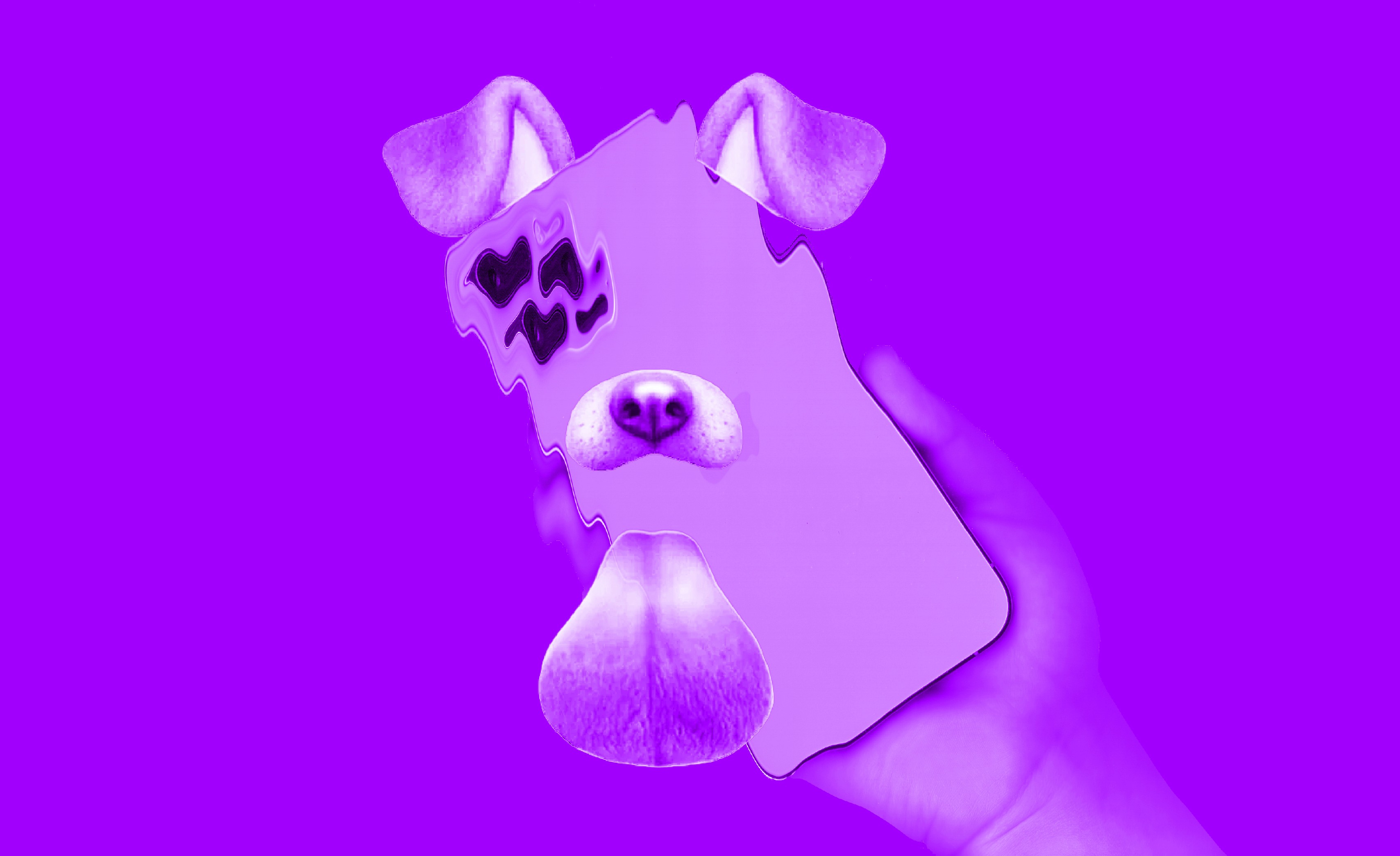
What filters used to look like
For older generations, filters were easy to spot. Early augmented reality filters, like Snapchat’s dog ears or flower crown effects, simply placed a graphic on top of a face. They didn’t change facial structure, skin texture, or body shape. The user could clearly tell the image was altered, and the filter was understood as playful rather than realistic.
For Millennials and early Gen Z, these filters existed alongside an awareness that they were artificial. There was still a clear separation between a real face and a filtered one.
How AI filters work differently today
AI beauty filters operate in a completely different way. Instead of layering graphics over an image, these filters now use data to replicate and reconstruct the face itself. Many are powered by Generative Adversarial Network technology, which regenerates every pixel of a face based on large datasets of images.
Rather than “adding” something to a face, the filter rebuilds it. Skin texture is smoothed, facial proportions are subtly adjusted, and features are reshaped according to an algorithmic ideal. Because the changes are integrated into the image itself, the result feels realistic rather than decorative.
Why Gen Alpha is more vulnerable
This shift matters because Gen Alpha is encountering these filters earlier and more often than previous generations. Millennials and older Gen Z users were introduced to filters after they had already formed a basic sense of identity and self-image. Gen Alpha is encountering AI beauty filters during key developmental years.
Because modern filters are subtle and adaptive, many young users do not recognize them as filters at all. Instead, they absorb these images as normal. Over time, it becomes harder to distinguish between an authentic image and an algorithm-generated one.
Why this difference matters
For Gen Alpha, AI beauty filters are not a novelty. They are part of the visual environment.
When filters no longer look fake, the brain stops questioning them. The risk is no longer just comparison to others, but comparison to an AI-generated version of oneself. This creates a fundamentally different relationship to appearance and self-worth than previous generations experienced.
The "filter" talk
The solution is not eliminating social media. Instead, it starts with awareness and conversation.
Parents can begin by paying attention to how filters are being used and talking openly with their tween about how filters work and what they are designed to do. Having an ongoing “filter talk” helps girls understand that many images online are manipulated. Celebrating their unique features, interests, and strengths helps anchor self-worth in who they are, not how they appear online.
Finally, media literacy brings these pieces together. Teaching tweens to question what they see, why it was created, and how it makes them feel gives them tools to navigate social media without internalizing its most harmful messages. Early guidance matters, and these skills help protect self-esteem long before insecurity becomes something deeper.
Sources & further reading
How GAN technology powers AI beauty filters: An overview of how generative AI reconstructs faces and alters appearance
Why AI filters feel more real than ever: An explanation of why modern filters are harder to detect and the impact on adolescents
The hidden dangers of online beauty filters: How beauty filters impact self-image





© 2026 gurl core™ | Contact